
Best Strength Training Equipment for a Home Gym 2026
Updated: 12 hours ago

For most home gyms, start with adjustable dumbbells, resistance bands, a stable bench, and protective flooring. Add a kettlebell for dynamic training. If your goal is the squat, bench press, and deadlift, prioritize a suitable rack with safeties, a barbell, weight plates, collars, and a bench.
Affiliate disclosure: V9 Fitness may earn a commission if you purchase through the American Barbell collection link in this article, at no additional cost to you.
FEATURED EQUIPMENT PARTNER
Quick Verdict
Best first purchase
Adjustable or Hex Dumbbells
Full-body training with minimal setup and strong progression options.
Best for small spaces
Resistance Bands
Portable resistance for warmups, assistance, accessory work, and travel.
Best for functional strength
Kettlebell
Swings, carries, goblet squats, presses, cleans, and conditioning.
Best for maximum strength
Barbell, Plates and Rack
The core setup for progressive squats, bench presses, deadlifts, and overhead presses.
Best support tool
Stable Bench
Expands pressing, rowing, split-squat, step-up, and seated exercise options.
Best safety foundation
Rubber Flooring
Protects the floor, improves traction, and defines the lifting zone.
Best for power
Medicine or Slam Ball
Supports throws, slams, rotational work, and athletic conditioning.
Best premium upgrade
Cable or Functional Trainer
Adds adjustable resistance after the essentials are covered.
BROWSE ALL STRENGTH EQUIPMENT

SHOP EQUIPMENT FROM THE SCORECARD
Equipment Image Gallery


How We Evaluated the Equipment
V9 Fitness assessed each tool for training versatility, progression potential, safety value, space efficiency, and budget accessibility. The recommendations prioritize equipment that supports a repeatable program rather than the largest possible collection.
Versatility
How many movement patterns and muscle groups the tool can train.
Progression
How easily resistance can increase as strength improves.
Safety
Whether the tool supports controlled training and appropriate safeguards.
Space efficiency
Useful training value per square foot.
Budget accessibility
Whether the item contributes enough value to justify buying it now.
Essential Equipment Breakdown
Dumbbells: Best First Purchase
Dumbbells support presses, rows, squats, lunges, Romanian deadlifts, curls, extensions, carries, and unilateral exercises. Adjustable models save space, while fixed hex dumbbells are faster to change but need more room.
Best for | Full-body strength |
Space | Low to moderate |
Progression | Weight increments |
Beginner | Excellent |
Storage | Pair or rack |
Priority | Very high |
Advantages
Highly versatile
Supports unilateral training
Works without a rack
Scales across experience levels
Limitations
Fixed sets need space
Heavy pairs become expensive
Some adjustable systems change slowly
Dropped weights can damage floors
Best for: Beginners and compact home gyms.
Skip or delay if: Your only goal is maximal barbell strength.
Bottom line: Dumbbells offer the broadest first-purchase value.
Resistance Bands: Best for Small Spaces

Bands support rows, presses, pulldowns, curls, triceps work, assisted pull-ups, and lower-body accessory exercises. Resistance increases as the material stretches, so loading differs from free weights.
Best for | Travel and accessories |
Resistance | Variable |
Space | Very low |
Portability | Excellent |
Inspection | Before use |
Priority | High |
Advantages
Low cost
Easy storage
Portable
Useful for warmups
Works with bodyweight training
Limitations
Resistance is less standardized
Bands wear over time
Anchor failure can cause injury
Harder to load precisely
Best for: Small rooms, travel, and accessory work.
Skip or delay if: You need precise heavy loading.
Bottom line: Bands are the highest-value compact addition.
Kettlebell: Best for Functional Strength

Kettlebells combine strength, power, grip, and conditioning. Common movements include swings, goblet squats, carries, presses, cleans, rows, and Turkish get-ups. Dynamic lifts require technique and controlled progression.
Best for | Power and conditioning |
Space | Low |
Patterns | Hinge, squat, carry |
Grip | High demand |
Technique | Moderate |
Priority | High |
Advantages
Compact
Supports explosive training
Excellent for carries
Builds grip and work capacity
Limitations
Fixed weight limits progression
Dynamic lifts need coaching
Handle size affects comfort
Can damage flooring
Best for: Functional fitness and compact gyms.
Skip or delay if: You need small incremental loading for traditional lifts.
Bottom line: One suitable kettlebell adds power and conditioning efficiently.
Barbell and Plates: Best for Progressive Strength

A barbell and compatible plates make progressive loading straightforward for squats, deadlifts, bench presses, overhead presses, rows, and Olympic-lifting variations. Choose a bar that matches the intended training style and confirm plate compatibility.
Best for | Heavy progression |
Length | Often 7 feet |
Space | High |
Safety | Rack required |
Plates | Iron or bumper |
Priority | High for Big 3 |
Advantages
Excellent progression
Ideal for compound lifts
Standardized loading
Long service life
Limitations
Requires space
Rack and flooring add cost
Solo lifting needs safeties
Noise requires planning
Best for: Lifters focused on the Big 3 and progressive loading.
Skip or delay if: You lack clearance, flooring, or a rack.
Bottom line: The complete safe system matters more than the bar alone.
Stable Bench: Best Support Tool

A stable bench expands dumbbell and barbell training with pressing, supported rows, split squats, step-ups, hip thrusts, and seated movements. Look for a firm pad, non-slip base, suitable rating, and minimal movement.
Best for | Pressing and support |
Type | Flat or adjustable |
Stability | Essential |
Space | Moderate |
Storage | Model dependent |
Priority | High |
Advantages
Expands exercise selection
Supports upper and lower body work
Useful with dumbbells and barbells
Limitations
Needs floor space
Cheap frames may wobble
Adjustable models cost more
Barbell use needs safeties
Best for: Anyone using dumbbells or barbell presses.
Skip or delay if: You have extremely limited room.
Bottom line: A firm bench is a high-value upgrade after dumbbells.
Gym Flooring: Best Safety Foundation

Flooring protects the room, improves traction, reduces movement, and creates a defined lifting area. Dense rubber is usually more appropriate beneath weights than thin yoga-style foam.
Best for | Floor protection |
Material | Dense rubber |
Placement | Training zone |
Impact | Match lifting style |
Trip risk | Keep seams flat |
Priority | Foundational |
Advantages
Protects floors
Improves traction
Reduces vibration
Supports equipment stability
Limitations
Adds cost and weight
Rubber may smell initially
Thin foam can separate
Poor seams create hazards
Best for: Any gym using weights, benches, or racks.
Skip or delay if: You are considering thin foam under heavy equipment.
Bottom line: Install appropriate flooring before heavy equipment arrives.
Medicine and Slam Balls: Best for Power
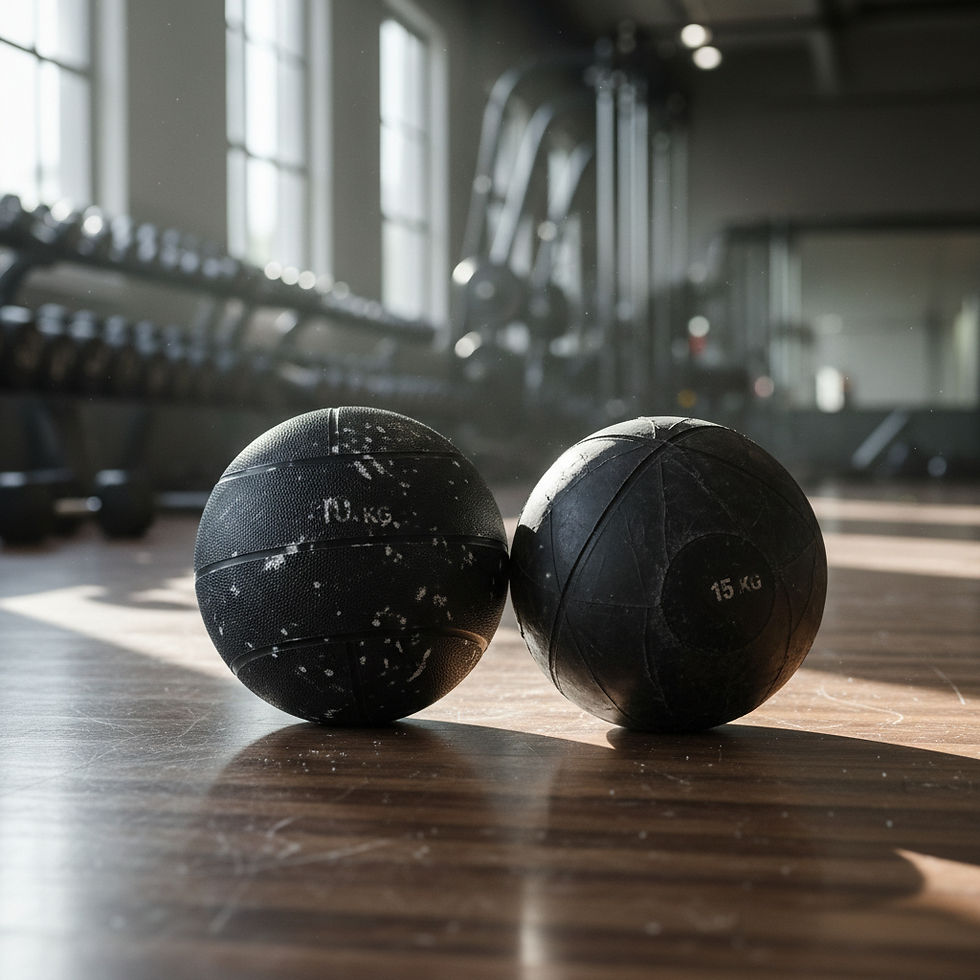
Medicine and slam balls support throws, slams, carries, rotational exercises, and athletic conditioning. Confirm that the ball is designed for the intended impact. Choose a load that preserves speed and control.
Best for | Power |
Movements | Throws and slams |
Space | Moderate |
Surface | Impact tolerant |
Weight | Speed first |
Priority | Optional |
Advantages
Builds power
Adds conditioning variety
Supports rotation
Compact storage
Limitations
Needs clear space
Creates noise and impact
Not all balls are slam-rated
Less useful for maximal strength
Best for: Athletes and functional-fitness users.
Skip or delay if: You have fragile flooring or limited clearance.
Bottom line: Add a ball after primary strength tools are covered.
Cable Machine: Best Premium Upgrade
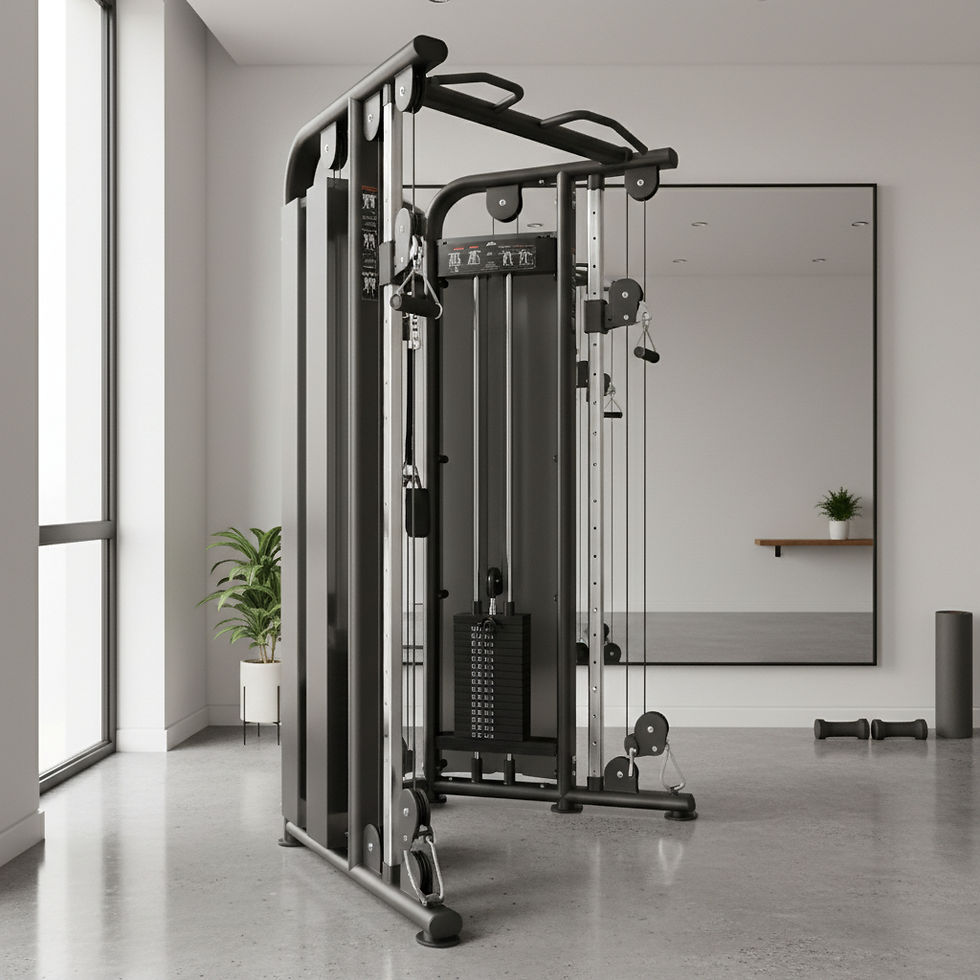
A cable or functional trainer adds adjustable resistance for pulldowns, rows, presses, flyes, raises, curls, triceps work, and rehabilitation-style exercises. The tradeoffs are price, footprint, delivery, and assembly.
Best for | Exercise variety |
Resistance | Weight stack |
Space | High |
Assembly | Usually required |
Progression | Pin selected |
Priority | Premium |
Advantages
Large exercise library
Quick resistance changes
Adjustable angles
Useful accessory work
Limitations
Expensive
Large footprint
Assembly and delivery
Maintenance requirements
Best for: Dedicated home gyms after core equipment is covered.
Skip or delay if: You still lack basic free weights, flooring, or safeties.
Bottom line: A cable machine is valuable, but rarely the first purchase.
The Big 3 Setup
The squat, bench press, and deadlift require more than a bar and plates. Build the setup as a safety system.
Rack or squat stand
Use appropriately rated safeties for squats and bench presses.
Barbell
Match shaft, knurling, and sleeves to the intended training.
Weight plates
Buy enough load for current strength and realistic progression.
Bench
Use a stable model that fits the rack.
Collars
Secure plates when movement could cause sliding.
Flooring
Protect the floor and create stable contact points.
Storage
Keep heavy items low and out of walkways.
Equipment by Home Gym Type
Small Apartment
Space saver
Start | Adjustable dumbbells |
Add | Bands and mat |
Optional | One kettlebell |
Delay | Rack and cable machine |
General Fitness
Balanced
Start | Dumbbells and bands |
Add | Bench and kettlebell |
Optional | Slam ball |
Delay | Full-body training |
Big 3 Strength
Barbell focus
Start | Rack, bar, plates |
Add | Bench and flooring |
Optional | Collars and safeties |
Delay | Bar clearance |
Athletic Training
Power focus
Start | Kettlebell and bands |
Add | Slam ball and dumbbells |
Optional | Cable station |
Delay | Speed and control |
Buying order: Add equipment only when it solves a clear limitation in resistance, safety, exercise selection, or convenience.
COMPARE CURRENT STRENGTH EQUIPMENT
How to Plan the Room
Measure first: Record floor area, ceiling height, door width, and barbell clearance.
Plan movement paths: Leave room to load plates and exit safely.
Protect the floor: Install suitable flooring before racks and machines arrive.
Store safely: Place heavy equipment low and outside walkways.
Plan delivery: Confirm package dimensions, stairs, turns, and assembly requirements.
Recheck hardware: Inspect bolts, safeties, cable paths, and bench stability regularly.
Honest Challenges
Upfront cost
A complete barbell setup requires a rack, plates, bench, flooring, collars, and storage.
Space adds up
Product footprints exclude the clearance needed for safe use.
Assembly takes planning
Benches, racks, and cable units may require two people.
Equipment does not create consistency
A smaller setup used regularly beats an expensive unused room.
Programming still matters
Sets, repetitions, load, progression, and recovery drive results.
Safety systems are essential
Do not squat or bench alone without appropriately positioned safeties.
Warranty, Delivery and Returns
Warranty terms vary by product. Review coverage for frames, upholstery, bearings, bushings, cables, finishes, and normal-wear components before ordering.
Heavy-equipment returns can involve freight and restocking charges. Confirm delivery method, package dimensions, assembly requirements, cancellation terms, and damage-reporting deadlines.
Frequently Asked Questions
What strength equipment should a beginner buy first?
Adjustable dumbbells and resistance bands are the strongest starting point for most beginners. Add a stable bench when you need more exercise options.
What equipment is required for the Big 3?
Use a suitable rack with safeties, barbell, plates, collars, stable bench, flooring, and enough clearance to load and move the bar.
Can resistance bands build strength?
Yes. Bands and bodyweight exercises can build strength when resistance and effort progress over time.
Are kettlebells better than dumbbells?
Neither is universally better. Dumbbells suit traditional strength work, while kettlebells excel at swings, carries, and dynamic movements.
Do I need a cable machine?
No. It adds variety, but dumbbells, bands, and a barbell system can cover most strength goals.
What flooring should I use?
Dense rubber is generally better under weights, benches, and racks than thin foam. Match thickness to equipment and impact.
How often should adults strength train?
Current public-health guidance recommends muscle-strengthening activity involving all major muscle groups on at least two days each week.
Is home strength training effective?
Yes. Bands, bodyweight exercises, machines, and free weights can all work when training is progressive and consistent.
Final Verdict
The best home strength setup is the smallest collection of equipment that supports progressive, safe, and consistent training. For most people, adjustable dumbbells, resistance bands, a stable bench, and flooring provide the strongest starting value.
Add a kettlebell for power and conditioning. Build a rack, barbell, plate, bench, and flooring system if the squat, bench press, and deadlift are central goals. Consider a cable machine only after the essentials are covered.
American Barbell’s collection includes training bars, benches, dumbbells, kettlebells, slam balls, and selectorized strength equipment for different home-gym stages.
VIEW CURRENT AMERICAN BARBELL EQUIPMENT
More V9 Fitness resources: Home fitness equipment | Fitness shop | V9 Fitness
Last updated September 11, 2026. Product availability, specifications, warranties, and prices can change. Measure your space and verify the current product page before ordering.


Comments